In today’s fast-paced digital world, cloud based CRM benefits are transforming how businesses connect with customers. Scalable, secure, and accessible from anywhere, these systems empower teams to work smarter, not harder. Let’s dive into why they’re a game-changer.
Cloud Based CRM Benefits: Enhanced Accessibility and Mobility

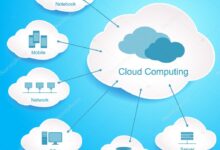
One of the most compelling cloud based CRM benefits is the ability to access customer data anytime, anywhere. With a cloud-based system, your sales, marketing, and support teams aren’t tied to a physical office or a specific device. This flexibility is crucial in an era where remote work and on-the-go client interactions are the norm.



Access from Any Device, Anywhere
Cloud CRM platforms are built to be device-agnostic. Whether you’re using a desktop, laptop, tablet, or smartphone, you can log in securely and view real-time customer information. This means a sales rep can pull up a client’s history while en route to a meeting or update a deal stage during a coffee break.
- Compatible with iOS, Android, Windows, and macOS
- Responsive design ensures optimal viewing on any screen size
- Offline mode available in many platforms for limited connectivity
This universal access eliminates data silos and ensures that everyone in the organization is working with the most up-to-date information. According to Salesforce, companies using mobile CRM see a 25% increase in sales productivity (Salesforce, 2023).
Real-Time Collaboration Across Teams
Cloud-based CRMs enable seamless collaboration between departments. When marketing launches a new campaign, sales can instantly see lead sources and engagement metrics. Customer service can view previous interactions logged by sales, reducing repetition and improving customer experience.
- Shared calendars and task lists improve coordination
- Internal messaging and comment threads keep communication in context
- File sharing and document integration (e.g., Google Drive, Dropbox) enhance teamwork
“The ability to collaborate in real time across departments has reduced our response time to customer inquiries by 40%.” — Marketing Director, TechStart Inc.
Platforms like HubSpot and Zoho CRM offer team collaboration features that integrate directly into the workflow, making it easier to align goals and execute strategies cohesively.
Cloud Based CRM Benefits: Cost Efficiency and Predictable Spending
Traditional on-premise CRM systems often come with high upfront costs—servers, software licenses, IT staff, and maintenance. Cloud based CRM benefits include a shift from capital expenditure (CapEx) to operational expenditure (OpEx), making it easier for businesses to manage budgets and scale as needed.
No Upfront Hardware Investment
With a cloud CRM, there’s no need to purchase and maintain physical servers. The provider hosts the software on secure data centers, handling all infrastructure needs. This eliminates:
- Server procurement and setup costs
- Power, cooling, and physical space requirements
- On-site IT personnel dedicated to CRM maintenance
For small and medium-sized businesses (SMBs), this is a major advantage. Instead of spending tens of thousands on infrastructure, they can start with a monthly subscription as low as $10–$50 per user. This democratizes access to enterprise-grade tools.
Subscription-Based Pricing Models
Most cloud CRM vendors offer tiered pricing based on features and number of users. This allows businesses to start small and upgrade as they grow. For example:
- Basic plan: Contact management, email integration
- Professional plan: Sales automation, reporting
- Enterprise plan: Advanced analytics, API access, custom workflows
This scalability ensures you only pay for what you need. A study by Nucleus Research found that cloud CRM delivers an average ROI of $8.71 for every dollar spent—significantly higher than on-premise alternatives (Nucleus Research, 2022).
“Switching to a cloud CRM reduced our IT overhead by 60% in the first year alone.” — CFO, GrowthWave Solutions
Cloud Based CRM Benefits: Rapid Deployment and Easy Scalability
Time-to-value is critical in business. Cloud based CRM benefits shine when it comes to deployment speed and the ability to scale operations without technical bottlenecks.
Quick Setup and Onboarding
Unlike traditional systems that can take weeks or months to install and configure, cloud CRMs can be up and running in days. Most platforms offer guided setup wizards, pre-built templates, and onboarding support.
- Import contacts and leads via CSV or integrations
- Customize fields and pipelines without coding
- Invite team members and assign roles instantly
For instance, Insightly reports that 70% of its customers go live within one week of signing up. This rapid deployment allows businesses to start seeing value—like improved lead tracking and faster follow-ups—almost immediately.
Effortless Scaling for Business Growth
As your business grows, so do your CRM needs. Cloud platforms automatically scale to accommodate more users, data, and functionality. Whether you’re adding five new sales reps or expanding into a new market, the system adapts without requiring hardware upgrades.
- Add or remove users with a few clicks
- Scale storage and processing power seamlessly
- Deploy region-specific instances for global teams
This elasticity is especially valuable for startups and fast-growing companies. You’re not locked into long-term infrastructure decisions—you can pivot and scale with market demands.
Cloud Based CRM Benefits: Automatic Updates and Continuous Innovation
One of the hidden cloud based CRM benefits is that users always have access to the latest features without manual intervention. Vendors handle updates, security patches, and performance improvements in the background.
No Manual Upgrades Required
With on-premise systems, upgrading often means downtime, compatibility checks, and IT labor. Cloud CRMs eliminate this burden. Updates are rolled out automatically, usually during off-peak hours, ensuring minimal disruption.
- New features appear seamlessly in the user interface
- No need to download or install patches
- Backward compatibility is maintained by the vendor
This means your team always benefits from the latest tools—like AI-powered lead scoring or voice-to-text note-taking—without lifting a finger.
Access to Cutting-Edge Features
Cloud CRM providers invest heavily in R&D to stay competitive. This means customers get early access to innovations such as:
- Artificial intelligence for predictive analytics
- Machine learning for customer behavior insights
- Integration with emerging technologies like WhatsApp Business or voice assistants
For example, Salesforce Einstein AI helps sales teams prioritize leads based on historical data and engagement patterns. Similarly, HubSpot uses machine learning to recommend the best time to email a contact. These features would be prohibitively expensive to develop in-house.
“We gained AI-driven insights within six months of using our cloud CRM—something we couldn’t have built ourselves.” — Sales VP, NextGen Retail
Cloud Based CRM Benefits: Superior Data Security and Compliance
Contrary to common misconceptions, cloud based CRM benefits include stronger security than many on-premise systems. Reputable providers invest in enterprise-grade security measures that most businesses can’t replicate internally.
Enterprise-Grade Encryption and Access Controls
Top cloud CRM platforms use end-to-end encryption for data at rest and in transit. This means customer information is protected from unauthorized access, even if intercepted.
- AES-256 encryption for stored data
- TLS 1.2+ for data transmission
- Multi-factor authentication (MFA) for user logins
In addition, role-based access control (RBAC) ensures that employees only see data relevant to their job. A customer service agent might view support tickets but not financial details, while a sales manager can see pipeline forecasts but not HR records.
cloud based crm benefits – Cloud based crm benefits menjadi aspek penting yang dibahas di sini.
Compliance with Global Standards
Cloud CRM vendors comply with major data protection regulations, including:
- GDPR (General Data Protection Regulation) in Europe
- CCPA (California Consumer Privacy Act) in the U.S.
- ISO/IEC 27001 for information security management
They also undergo regular third-party audits and provide tools for data export, deletion, and consent management. This reduces the legal and financial risks associated with non-compliance. For instance, Microsoft Dynamics 365 offers built-in GDPR compliance dashboards to help organizations manage data subject requests efficiently (Microsoft, 2023).
“Our cloud CRM provider’s compliance certifications gave us the confidence to expand into the EU market without legal hurdles.” — Legal Counsel, GlobalMed Inc.
Cloud Based CRM Benefits: Seamless Integration with Business Tools
A CRM doesn’t exist in isolation. One of the most powerful cloud based CRM benefits is the ability to integrate with other business applications—email, marketing automation, e-commerce, and accounting software.
Native and Third-Party App Ecosystems
Most cloud CRMs offer extensive app marketplaces. Salesforce AppExchange, for example, hosts over 3,000 apps that extend functionality. HubSpot’s integration library connects with 1,000+ tools, including Zoom, Slack, and Shopify.
- Email integration with Gmail and Outlook for automatic logging
- Marketing tools like Mailchimp or ActiveCampaign for campaign tracking
- Payment systems like Stripe or PayPal for order history
These integrations create a unified workflow, reducing the need to switch between apps and minimizing data entry errors.
API Access for Custom Development
For businesses with unique needs, cloud CRMs provide robust APIs (Application Programming Interfaces) to build custom integrations or automate processes.
- REST and SOAP APIs for real-time data exchange
- Webhooks to trigger actions in other systems
- SDKs for building custom mobile or web apps
This flexibility allows companies to tailor the CRM to their specific workflows. A logistics firm might integrate their CRM with a fleet management system to track delivery status, while an e-learning platform could sync CRM data with their LMS to monitor student progress.
“Using APIs, we connected our CRM to our inventory system, reducing order processing time by 30%.” — Operations Manager, SmartSupply Co.
Cloud Based CRM Benefits: Advanced Analytics and Business Intelligence
Data is only valuable if you can understand and act on it. Cloud based CRM benefits extend to powerful analytics capabilities that turn raw data into actionable insights.
Real-Time Dashboards and Reporting
Cloud CRMs offer customizable dashboards that display key performance indicators (KPIs) in real time. Sales managers can monitor conversion rates, average deal size, and pipeline health at a glance.
- Drag-and-drop report builders for non-technical users
- Pre-built templates for common metrics (e.g., sales funnel, customer retention)
- Scheduled report delivery via email
These tools empower decision-makers with timely information. A marketing team can adjust campaigns based on lead source performance, while executives can forecast revenue with greater accuracy.
Predictive Analytics and AI Insights
Advanced cloud CRMs leverage AI to predict future outcomes. For example:
- Forecasting which leads are most likely to convert
- Identifying at-risk customers for retention efforts
- Recommending next-best actions for sales reps
These predictive capabilities reduce guesswork and increase efficiency. According to Gartner, by 2025, 70% of customer interactions will involve AI-driven insights, up from 15% in 2021 (Gartner, 2022).
“AI-powered forecasting helped us improve our sales accuracy by 22% last quarter.” — Director of Sales, Apex Technologies
What are the main cloud based CRM benefits?
The main cloud based CRM benefits include enhanced accessibility, cost efficiency, rapid deployment, automatic updates, superior security, seamless integrations, and advanced analytics. These advantages help businesses improve customer relationships, increase productivity, and scale operations efficiently.
Is a cloud CRM secure?
Yes, reputable cloud CRM providers use enterprise-grade security measures such as encryption, multi-factor authentication, and compliance with global data protection regulations. In many cases, they offer better security than on-premise systems due to dedicated security teams and continuous monitoring.
How does a cloud CRM save money?
A cloud CRM saves money by eliminating upfront hardware costs, reducing IT maintenance expenses, and offering flexible subscription pricing. Businesses pay only for what they use and can scale up or down as needed, avoiding overinvestment in infrastructure.
Can a cloud CRM integrate with other tools?
Yes, most cloud CRMs offer extensive integration capabilities with email, marketing automation, e-commerce, and accounting platforms. They also provide APIs for custom integrations, allowing businesses to connect their CRM with virtually any business application.
How quickly can a cloud CRM be implemented?
Cloud CRMs can typically be implemented in days or weeks, depending on complexity. Many vendors offer guided onboarding, pre-built templates, and support services to accelerate deployment and ensure a smooth transition.
In conclusion, the cloud based CRM benefits are transformative for modern businesses. From boosting team mobility and reducing costs to enabling AI-driven insights and seamless integrations, these systems are no longer just a convenience—they’re a strategic necessity. Whether you’re a startup or an enterprise, adopting a cloud CRM can enhance customer relationships, improve operational efficiency, and drive sustainable growth. The future of customer relationship management is in the cloud, and the time to embrace it is now.
cloud based crm benefits – Cloud based crm benefits menjadi aspek penting yang dibahas di sini.
Further Reading:
